
CUSTOMER STORY
How MCB is using the generational shift to discover internal talent and help it grow
Originally founded as Metaalcompagnie Brabant, MCB has now existed for 85 years. In that time, the organization has continuously developed and innovated, in both its services and its product range. The time has come to further modernize its talent management processes as well and make them future-proof.
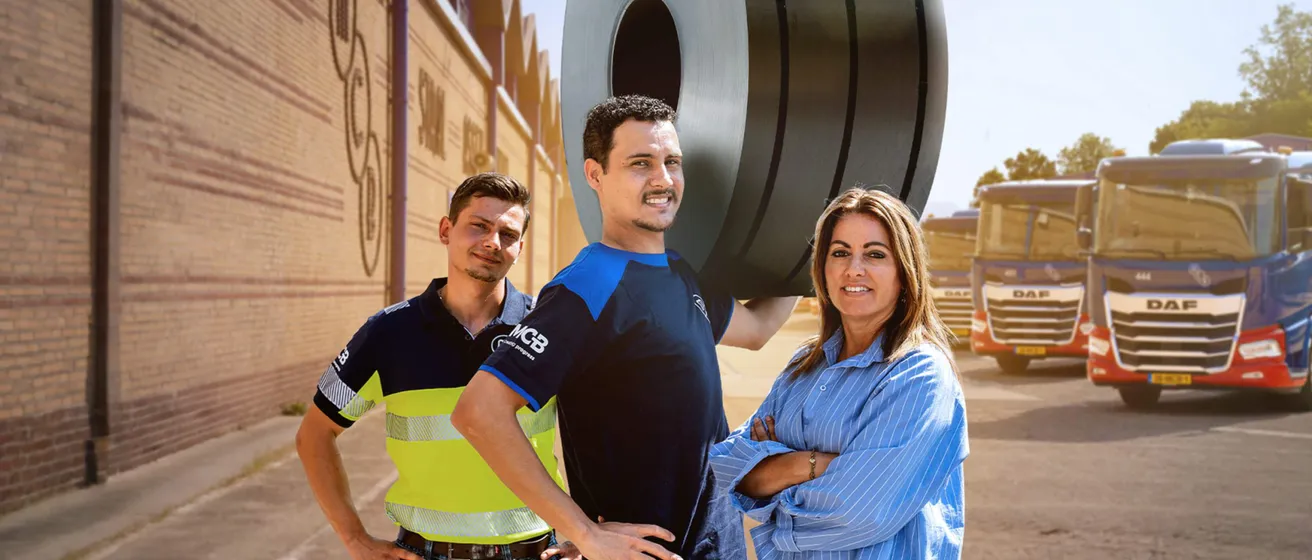
With the upcoming generational shift, the urgency to gain better insight into talent and succession grew. Janneke van Stekelenburg, HR Manager at MCB, explains what is therefore at the top of the agenda:
“People who have worked for us for 30 or 40 years are perfectly normal here. A large share of them will retire soon. This affects all job groups, from skilled workers to managers. A considerable part of the existing knowledge and experience will leave the organization in the coming years, which underlines the importance of knowledge retention and talent development.”
It is essential for MCB's future that the right internal talent moves up into positions that will become vacant in the coming years. It is also important that new talent comes in to replace them.
MCB has been working with Talensa since 2025. Together they make visible what talent exists within the organization and explore the available growth paths. At the same time, Talensa supports the measurable development of internal talent.
“We want to create a new generation within the company, which is why we were looking for a partner who really helps us gain insight into that.”
Janneke shares how MCB’s entire talent lifecycle has been taken to a higher level, so that it is ready for that generational shift.
The old way of working no longer fit
Today's junior may be the manager or board member who will be needed later, but then you do need to have that talent in view. In addition, the employee needs a development path in order to grow into the future role.
At MCB, development had “a fairly traditional form”: twice a year a standard form was filled in and there was a conversation with HR. That was exactly where Janneke wanted to offer more freedom and flexibility.
Conversations about recruitment, selection and promotion also relied largely on gut feeling, while across the organization there was a desire to “base this on facts” above all and to broaden it.
“Because ultimately you want to put the right man or woman in the right place.”
The overview of existing talent, candidates in recruitment, internal growth potential and development plans was “fragmented”. Information was spread across different systems: assessments in separate files, development conversations in AFAS and recruitment data in a separate ATS. In addition, a lot of knowledge was held implicitly by managers.
When Talensa came into the picture as a solution to these challenges, it was not an unknown party. Joost Gruijters, director of Talensa, was already providing selection assessments to MCB.
“We rolled into this together with Joost: our collaboration has always been pleasant and we have a lot of trust in Talensa,” says Janneke.

It started with building support in the management team
Janneke immediately realized that Talensa’s broad applicability also had to take hold outside HR. So she started at the top. “We began by getting the management team enthusiastic, and Joost joined in as well. That’s how we created support at an important level.”
The effect of the possibilities within Talensa became visible through what managers told Janneke:
“It gives me the tools to start the conversation about talent development within my team. I gain insight into my own choices: why do I put certain people in specific roles, where are their growth opportunities and which qualities might still be missing in the team?”
Where MCB previously depended on individual managers to recognize talent, the organization now has a broad view of potential successors and development opportunities.
Getting the new generation ready
The first concrete form the collaboration took was the potential program, which has now run for two successful cohorts.
For each cohort, MCB selected twenty employees, so-called “high potentials”, nominated by their own manager. They took an assessment and went through the entire program in the Talensa Hub.
This inventory made clear which career path suited someone and which development went with it. The translation from development opportunities to goals, and to the eventual program that was turned into actions, took place in Talensa.
This brought a number of striking talents to the surface. Of a few employees, for example, it was concluded that a future director might be among them. Participants from the potential program have since actually moved up into management positions.
Janneke finds what it did for the participants who did not get a new job just as valuable. They were mostly people in their thirties, searching for what suits them. They gained practical tools and a view of what else is possible within MCB, because: “Not everyone has to become a manager. If you want to grow, you can certainly do that in other areas too.”
Janneke therefore calls Talensa “a gift to our employees”: you are in charge of your own development.
Job architecture and recruitment finally under one roof
An important foundation lies in the job architecture. Unfortunately, it is usually a paper tiger: something exists, usually outdated, and real value is rarely gained from it. And that while an objective, up-to-date and neatly structured job architecture can form the basis for selection, internal matching, development and promotion.
“The job architecture, that really is the core of the whole system.”
The existing job architecture and all job profiles are currently being updated and rewritten with the future in mind, and have been centralized in the Talensa Hub.
MCB used to work with a separate recruitment system; it has since been replaced by an ATS that Talensa custom-built together with MCB's recruitment team. As a result, the entire talent lifecycle is in one platform.
Within the steel giant, HR and recruitment now have the tools they need too
Talensa has become an everyday tool for many people within MCB. Recruitment works with assessments daily, and HR and managers also use it as standard when supporting employees.
“This allows us to make better-founded selections, better predict which candidates will be successful and limit the costs of possible mismatches.”
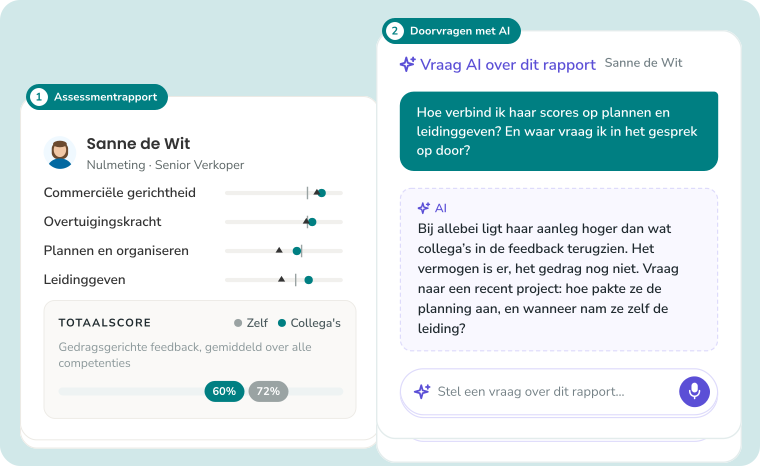
Another big difference from before lies in what happens after an assessment. If there were additional questions after reading the report, MCB would call talent coach Joost to discuss them. Now those same questions are put to the AI tool in Talensa.
“How do you see it, and how would you connect these results? Or can you give some more psychological advice on that? So you actually have a digital Joost [talent coach] in your program. That is really very valuable.”
Everyone in the organization can zoom in on the reports in more depth themselves.
What Talensa is and isn't at MCB
Ask Janneke what Talensa is and she keeps it down-to-earth: a company-wide tool for gaining insight into talent. The ability to map the strengths and development opportunities of everyone who works for us. “With the help of the platform, you can deploy employees in the right place, but also help them get to where they want to be.”
She is just as down-to-earth about what it isn't. She isn't swapping AFAS for it: personnel files and payroll simply stay there. What does shift is the recording of development and conversations, from AFAS to Talensa.
What it has delivered so far
Talent development has company-wide support
The topic moved from HR to the boardroom and is alive in the management team.
Internal mobility is under way
A number of participants in the potential program now hold management positions or have grown within a specialization.
Objective assessments have become everyday practice
Recruitment and HR work with it every day and also use AI to dig deeper into the reports.
Development happens continuously
Employees and managers can draw up and carry out development plans themselves; HR doesn't always need to be involved.
Developments are still in full swing. The close collaboration between MCB and Talensa keeps generating new ideas, such as linking Talensa to a digital learning platform or linking a development program directly to study material relevant to a specific position.
Together, they are working toward a situation in which MCB can offer its employees “an A-to-Z journey of talent development”.
Is your next director already working in your organization?
MCB brings internal talent into view, with assessments, development paths and recruitment in one system. Want to know more about our assessments, the platform or the Potential Program?